( ESNUG 531 Item 3 ) -------------------------------------------- [09/19/13]
From: [ Gloria Nichols of LaunchM ]
Subject: Tech vs. Selling your ideas -- plus Wally/Joe/Dean/Aart's tips
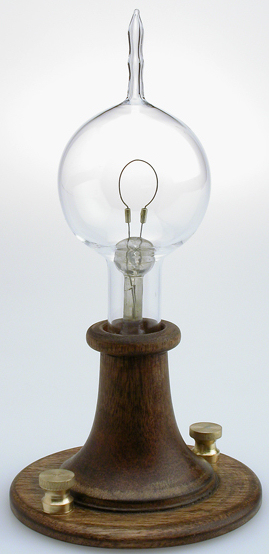
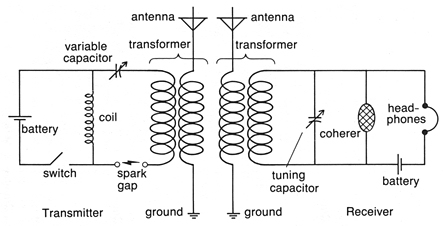
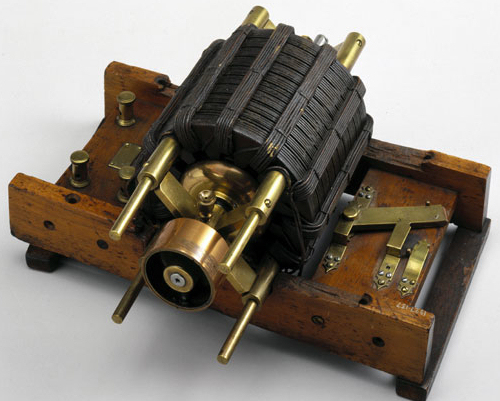
Around hundred years ago all of the great electrical inventions from that
time (such as the lightbulb, the radio, and the AC motor) were created by
brilliant "lone wolf" engineers like Edison, Marconi, and Tesla.
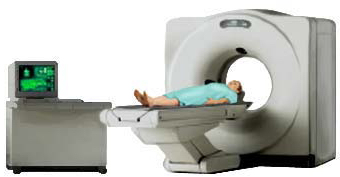
   Today, every major electronic device we use is (or was) created by large
teams of engineers. Think the Internet, CAT scanners, HDTV, aerospace
avionics, PC's.
Today, every major electronic device we use is (or was) created by large
teams of engineers. Think the Internet, CAT scanners, HDTV, aerospace
avionics, PC's.
  While Steve Jobs may get much of the public credit for iPhones, iPods, and
iPads; the reality is each product involved thousands of hardware, firmware,
software, and manufacturing engineers working together in groups to make
these devices real.
---- ---- ---- ---- ---- ---- ----
ENGINEERING IS NOW A GROUP ACTIVITY
While some may say this means the days of the lone wolf rockstar engineer
are over, they couldn't be more wrong. Now rockstar engineers have to
come up with brilliant ideas and be able to sell these ideas to others.
"Have you ever been in a meeting where you made a point, then
10 minutes later, someone else in your meeting made your very
same point -- and everyone loved *their* idea?"
Steve Jobs got the credit at Apple because he was the guy who had the vision
for each product -- plus Jobs was the guy who could persuade large groups of
engineers to make his visions real.
In a July 2013 survey, 205 engineers and engineering managers were asked:
While Steve Jobs may get much of the public credit for iPhones, iPods, and
iPads; the reality is each product involved thousands of hardware, firmware,
software, and manufacturing engineers working together in groups to make
these devices real.
---- ---- ---- ---- ---- ---- ----
ENGINEERING IS NOW A GROUP ACTIVITY
While some may say this means the days of the lone wolf rockstar engineer
are over, they couldn't be more wrong. Now rockstar engineers have to
come up with brilliant ideas and be able to sell these ideas to others.
"Have you ever been in a meeting where you made a point, then
10 minutes later, someone else in your meeting made your very
same point -- and everyone loved *their* idea?"
Steve Jobs got the credit at Apple because he was the guy who had the vision
for each product -- plus Jobs was the guy who could persuade large groups of
engineers to make his visions real.
In a July 2013 survey, 205 engineers and engineering managers were asked:
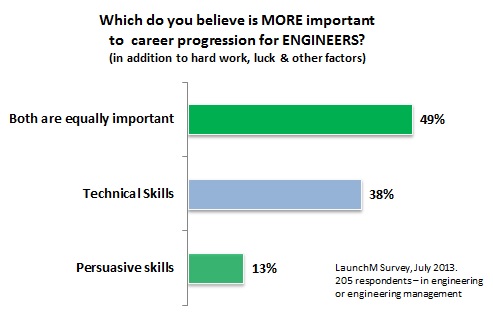 The fact that 38 percent cited technical skills as "more important" wasn't
surprising. After all, these are engineers and engineering managers who're
responding; they're people who chose to work in highly technical careers.
They've each invested thousands of personal man-hours in high school and
college classes just to become an engineer.
What was unexpected in this survey is how 49 percent cited persuasive skills
as "equally important" to their career progression -- something that most
engineers haven't spent time studying.
Why 49 percent?
It's that most engineering today reguires group buy-in. So just as you
invested in technical skills, it's a good idea to pick up some "influence
skills" along the way, too.
---- ---- ---- ---- ---- ---- ----
Wally Rhines, Dean Drako, Aart De Geus and Joe Costello are arguably the
most successful Engineer-CEOs we have had in our industry. And they each
have an established multi-decade track record of successfully influencing
both large and small audiences.
The fact that 38 percent cited technical skills as "more important" wasn't
surprising. After all, these are engineers and engineering managers who're
responding; they're people who chose to work in highly technical careers.
They've each invested thousands of personal man-hours in high school and
college classes just to become an engineer.
What was unexpected in this survey is how 49 percent cited persuasive skills
as "equally important" to their career progression -- something that most
engineers haven't spent time studying.
Why 49 percent?
It's that most engineering today reguires group buy-in. So just as you
invested in technical skills, it's a good idea to pick up some "influence
skills" along the way, too.
---- ---- ---- ---- ---- ---- ----
Wally Rhines, Dean Drako, Aart De Geus and Joe Costello are arguably the
most successful Engineer-CEOs we have had in our industry. And they each
have an established multi-decade track record of successfully influencing
both large and small audiences.
    Joe Costello Aart De Geus Dean Drako Wally Rhines
------------ ------------ ---------- ------------
Qualcomm Synopsys IC Manage Mentor Graphics
VP Co-CEO CEO CEO
Cadence General Electric Barracuda Texas Instruments
former CEO former CAE mgr former CEO former VP
What follows are their insights on persuasive speaking plus a short video
clip showing their own unique speaking styles.
---- ---- ---- ---- ---- ---- ----
JOE COSTELLO, QUALCOMM, OASYS & MONTANA -- "Think Big"
1. Start every presentation with a clear end in mind. The end in
mind for any presentation is the experience you want to create
for your audience. That means that every presentation must be
customized for the unique audience in front of you. You must
think through exactly who the audience is, where they are coming
from, how you can most efficiently connect with them.
2. In general the goal of a presentation is to get people to see
something new or to see things differently. People come into
your presentation with an existing world view. You need to find
ways to literally jolt them into a new way of seeing the world.
It can sometimes be compelling facts or information, but the best
way that I have found is to tell a story because it helps the
audience get out of their own mental loops. They can be drawn in.
Humor is also helpful because it is often the easiest way to get
people to see the logical inconsistencies in the world that they
accept.
3. Bring all of you to the presentation and put it all out there.
Don't hold back. Passion is contagious and will help get your
audience engaged and open to your message. If you are not
passionate about your message, how can you expect the audience to
be interested? You are leading them. Be inspiring.
At the time when Joe Costello first became the CEO of Cadence, 1988, the
Big 3 in EDA were Daisy-Mentor-Valid. By 1993, Cadence was EDA's revenue
leader. In 2007, Joe became CEO of Orb Networks, which invented the
AllPlay platform for home audio and video that's most easily understood as
a version of Apple's AirPlay -- but open and with a lot more features. Orb
was acquired by Qualcomm in May 2013 to further itself in the Internet of
Things. In addition to now being VP of Product Management at Qualcomm,
Joe's an early investor in Oasys and Montana. Joe has a Masters in Physics
from Yale and a Masters in Physics from UC Berkeley.
---- ---- ---- ---- ---- ---- ----
AART DE GEUS, SYNOPSYS -- "Take A Stance"
1. Speak from the heart.
2. Be genuine and truthful.
3. Add to the topic: share a fresh insight, or have an opinion!
Aart starts at 44 seconds.
Aart de Geus founded Optimal Solutions in 1986 in RTP, NC, right after
getting his PhD in EE at Southern Methodist University. Very quickly he
moved the company to Mountain View, CA and renamed it Synopsys. Over the
past 27 years, Aart's been one of the extremely rare entrepreneurs who's
taken a company from start-up to public. Now with $1.8 billion in revenue
(2012), Synopsys is EDA's largest company. Aart's known for both his
technical vision and his business execution. Electronic Business magazine
named him as one of "The 10 Most Influential Executives" of 2005.
---- ---- ---- ---- ---- ---- ----
DEAN DRAKO, IC MANAGE -- "Compelling Value"
1. Identify your audience and talk only about things that matter to
them. Focus on what's important to them, not to you. As you are
creating the material, keep putting yourself in the audience's
shoes. It takes discipline but keep stepping back and looking at
it from their perspective. If you have a point that the audience
is not going to care about -- skip it.
Then pay attention to the audience in real time. If you feel you
are not connecting well, establish some direct interaction to
change that. See what is resonating, and spend more time on topics
that are peaking their interest, rather being tied to your original
planned presentation.
2. Use real life stories as examples whenever possible. Use names and
dates. Real data makes your points more memorable; it increases
people's interest and their belief in what you are delivering.
3. Take a position - talk from the heart and take some risk. Do it with
passion. People do not like listening to politicians who are
unwilling to take a position and who are always "politically correct".
That is very boring, and definitely not persuasive. Not everyone will
agree with you; learn why they disagree, to better overcome obstacles
for the future. Persist.
Dean Drako is one of those rare engineers who started his technical business
ventures back in high school. (And this was in the 80's -- before the days
when every kid had a computer in his home.) In 1982 at age 16, Dean started
his first company, "ZYX", that sold T-Net, a pre-internet bulletin board
software package he wrote -- which paid for his college education.
In 1983, Dean won the Intel International Science and Engineering Fair, and
the Westinghouse Science Talent Search in 1984. More recently, Drako
created the Signalscan debugger for Design Acceleration, Inc. (now Cadence)
and the Barracuda Spam & Virus Firewall for Barracuda Networks; he was
founder and CEO for both companies.
Drako is currently the CEO of IC Manage. He has an MSEE from UC Berkeley,
and holds 27 patents covering hardware, software, security, and networking.
---- ---- ---- ---- ---- ---- ----
WALLY RHINES, MENTOR GRAPHICS -- "Let The Data Speak"
1. Know your audience
a. Find out who will be attending, what their interests are and
what would have an impact on them.
b. Imagine what this audience normally hears from similar
speakers and try to find something new, unique and memorable.
c. A month or two after giving a speech, ask some of the people
who attended what you said and see if they remember.
2. Collect and analyze data
a. I find that, frequently, themes that I thought would make a
good speech turn out to be incorrect when I collect more data;
but the additional data collection usually leads to a more
interesting topic than the one I started pursuing.
b. Engineering audiences need data; they are not as influenced by
emotion and they want to see an analytical approach to your
theme and conclusions (with well documented sources that they
can check and research further.)
3. Don't talk about your company or your products (except for
occasional anecdotal examples). Audiences usually stop listening
when a speech becomes a company commercial or product pitch.
a. Look for a higher level theme that provides a unique
perspective for examining current trends, markets and
technologies. Amplify it with real life examples.
b. Find entertainment value at every stage of the speech
(Sometimes I ask myself how I would make each slide
entertaining or, if that's impossible, consider
eliminating the slide).
Wally Rhines was a 20 year veteran as VP of TI's Semiconductor Group, with
direct responsibility for $5 billion in revenue and 30,000 people -- before
he stepped directly into the CEO role at Mentor Graphics back in 1993.
Under Wally's tenure, Mentor is the only company of old Daisy-Mentor-Valid
troika that still continues to be a Big 3 EDA company decades later, now
with $1.1 billion in revenue in 2012. He has a PhD in EE from Stanford.
---- ---- ---- ---- ---- ---- ----
FOLLOW UP STEPS
One easy way to improve your persuasive speaking skills is to join your
local chapter of Toastmasters International -- an all volunteer organization
which teaches public speaking at 14,350 clubs in 122 countries. A typical
Toastmaster's meeting is held during lunch in a company cafeteria or in the
afternoon at a local library. There is no instructor. Instead, members
take turns giving presentations and evaluating each other's presentations.
This low pressure feedback is the key to the program's success. Over time
you get better. At $36 for a six month membership, it's a great way to
advance your career.
I wish to thank Aart, Dean, Joe and Wally for their time and insights.
- Gloria Nichols
LaunchM Woodside, CA
----------
Joe Costello Aart De Geus Dean Drako Wally Rhines
------------ ------------ ---------- ------------
Qualcomm Synopsys IC Manage Mentor Graphics
VP Co-CEO CEO CEO
Cadence General Electric Barracuda Texas Instruments
former CEO former CAE mgr former CEO former VP
What follows are their insights on persuasive speaking plus a short video
clip showing their own unique speaking styles.
---- ---- ---- ---- ---- ---- ----
JOE COSTELLO, QUALCOMM, OASYS & MONTANA -- "Think Big"
1. Start every presentation with a clear end in mind. The end in
mind for any presentation is the experience you want to create
for your audience. That means that every presentation must be
customized for the unique audience in front of you. You must
think through exactly who the audience is, where they are coming
from, how you can most efficiently connect with them.
2. In general the goal of a presentation is to get people to see
something new or to see things differently. People come into
your presentation with an existing world view. You need to find
ways to literally jolt them into a new way of seeing the world.
It can sometimes be compelling facts or information, but the best
way that I have found is to tell a story because it helps the
audience get out of their own mental loops. They can be drawn in.
Humor is also helpful because it is often the easiest way to get
people to see the logical inconsistencies in the world that they
accept.
3. Bring all of you to the presentation and put it all out there.
Don't hold back. Passion is contagious and will help get your
audience engaged and open to your message. If you are not
passionate about your message, how can you expect the audience to
be interested? You are leading them. Be inspiring.
At the time when Joe Costello first became the CEO of Cadence, 1988, the
Big 3 in EDA were Daisy-Mentor-Valid. By 1993, Cadence was EDA's revenue
leader. In 2007, Joe became CEO of Orb Networks, which invented the
AllPlay platform for home audio and video that's most easily understood as
a version of Apple's AirPlay -- but open and with a lot more features. Orb
was acquired by Qualcomm in May 2013 to further itself in the Internet of
Things. In addition to now being VP of Product Management at Qualcomm,
Joe's an early investor in Oasys and Montana. Joe has a Masters in Physics
from Yale and a Masters in Physics from UC Berkeley.
---- ---- ---- ---- ---- ---- ----
AART DE GEUS, SYNOPSYS -- "Take A Stance"
1. Speak from the heart.
2. Be genuine and truthful.
3. Add to the topic: share a fresh insight, or have an opinion!
Aart starts at 44 seconds.
Aart de Geus founded Optimal Solutions in 1986 in RTP, NC, right after
getting his PhD in EE at Southern Methodist University. Very quickly he
moved the company to Mountain View, CA and renamed it Synopsys. Over the
past 27 years, Aart's been one of the extremely rare entrepreneurs who's
taken a company from start-up to public. Now with $1.8 billion in revenue
(2012), Synopsys is EDA's largest company. Aart's known for both his
technical vision and his business execution. Electronic Business magazine
named him as one of "The 10 Most Influential Executives" of 2005.
---- ---- ---- ---- ---- ---- ----
DEAN DRAKO, IC MANAGE -- "Compelling Value"
1. Identify your audience and talk only about things that matter to
them. Focus on what's important to them, not to you. As you are
creating the material, keep putting yourself in the audience's
shoes. It takes discipline but keep stepping back and looking at
it from their perspective. If you have a point that the audience
is not going to care about -- skip it.
Then pay attention to the audience in real time. If you feel you
are not connecting well, establish some direct interaction to
change that. See what is resonating, and spend more time on topics
that are peaking their interest, rather being tied to your original
planned presentation.
2. Use real life stories as examples whenever possible. Use names and
dates. Real data makes your points more memorable; it increases
people's interest and their belief in what you are delivering.
3. Take a position - talk from the heart and take some risk. Do it with
passion. People do not like listening to politicians who are
unwilling to take a position and who are always "politically correct".
That is very boring, and definitely not persuasive. Not everyone will
agree with you; learn why they disagree, to better overcome obstacles
for the future. Persist.
Dean Drako is one of those rare engineers who started his technical business
ventures back in high school. (And this was in the 80's -- before the days
when every kid had a computer in his home.) In 1982 at age 16, Dean started
his first company, "ZYX", that sold T-Net, a pre-internet bulletin board
software package he wrote -- which paid for his college education.
In 1983, Dean won the Intel International Science and Engineering Fair, and
the Westinghouse Science Talent Search in 1984. More recently, Drako
created the Signalscan debugger for Design Acceleration, Inc. (now Cadence)
and the Barracuda Spam & Virus Firewall for Barracuda Networks; he was
founder and CEO for both companies.
Drako is currently the CEO of IC Manage. He has an MSEE from UC Berkeley,
and holds 27 patents covering hardware, software, security, and networking.
---- ---- ---- ---- ---- ---- ----
WALLY RHINES, MENTOR GRAPHICS -- "Let The Data Speak"
1. Know your audience
a. Find out who will be attending, what their interests are and
what would have an impact on them.
b. Imagine what this audience normally hears from similar
speakers and try to find something new, unique and memorable.
c. A month or two after giving a speech, ask some of the people
who attended what you said and see if they remember.
2. Collect and analyze data
a. I find that, frequently, themes that I thought would make a
good speech turn out to be incorrect when I collect more data;
but the additional data collection usually leads to a more
interesting topic than the one I started pursuing.
b. Engineering audiences need data; they are not as influenced by
emotion and they want to see an analytical approach to your
theme and conclusions (with well documented sources that they
can check and research further.)
3. Don't talk about your company or your products (except for
occasional anecdotal examples). Audiences usually stop listening
when a speech becomes a company commercial or product pitch.
a. Look for a higher level theme that provides a unique
perspective for examining current trends, markets and
technologies. Amplify it with real life examples.
b. Find entertainment value at every stage of the speech
(Sometimes I ask myself how I would make each slide
entertaining or, if that's impossible, consider
eliminating the slide).
Wally Rhines was a 20 year veteran as VP of TI's Semiconductor Group, with
direct responsibility for $5 billion in revenue and 30,000 people -- before
he stepped directly into the CEO role at Mentor Graphics back in 1993.
Under Wally's tenure, Mentor is the only company of old Daisy-Mentor-Valid
troika that still continues to be a Big 3 EDA company decades later, now
with $1.1 billion in revenue in 2012. He has a PhD in EE from Stanford.
---- ---- ---- ---- ---- ---- ----
FOLLOW UP STEPS
One easy way to improve your persuasive speaking skills is to join your
local chapter of Toastmasters International -- an all volunteer organization
which teaches public speaking at 14,350 clubs in 122 countries. A typical
Toastmaster's meeting is held during lunch in a company cafeteria or in the
afternoon at a local library. There is no instructor. Instead, members
take turns giving presentations and evaluating each other's presentations.
This low pressure feedback is the key to the program's success. Over time
you get better. At $36 for a six month membership, it's a great way to
advance your career.
I wish to thank Aart, Dean, Joe and Wally for their time and insights.
- Gloria Nichols
LaunchM Woodside, CA
----------

|
Gloria Nichols is an EDA consultant doing marketing VP
and strategic project work.  She's consulted for 41 EDA
companies, including these four above.  She did product
marketing at Cadence for timing and signal integrity.
Gloria has an MBA from Harvard Business School, and a
BS in Engineering from Stanford University.
|
Join
Index
Next->Item
|
|


